Challenge your ENT knowledge with exam-focused MCQs for Prometric Exams. Practice important topics, identify knowledge gaps, and prepare with greater confidence.
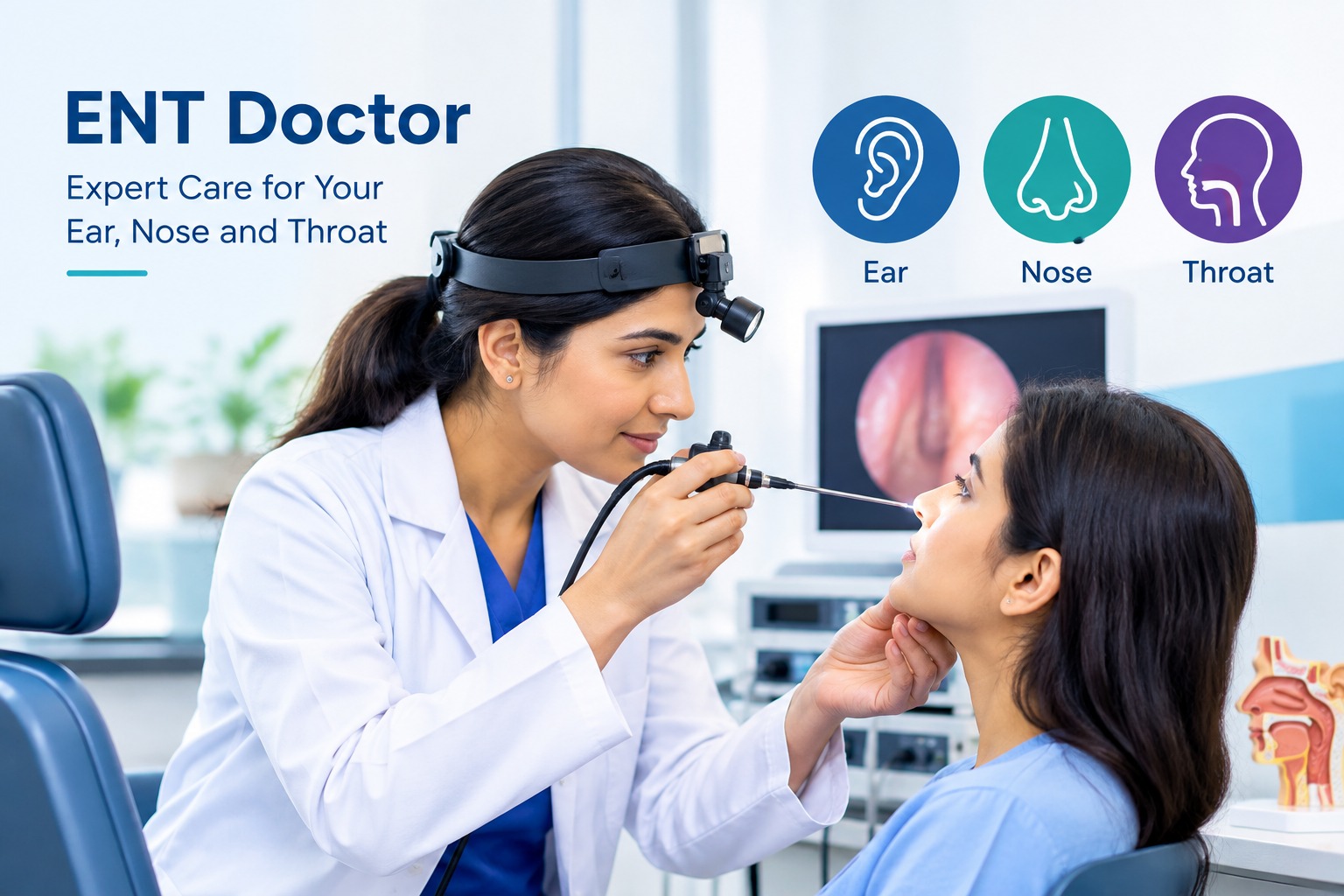
If you are getting ready for your licensing exam, you may have found out that ENT, which stands for Ear, Nose, and Throat, is one of those topics that seems easy until you are actually asked about it. So before you go into the exam room feeling too sure of yourself, it is an idea to think: how much do you really know about ENT? Because of this, this blog will test your knowledge with a mental multiple-choice question review. It will also explain why ENT Multiple Choice Questions for Prometric Exams should be a part of your study plan.
First, ENT is a very useful subject. Unlike specialties, ENT focuses on a few key parts. The ear, nose, throat, and nearby head and neck areas. Because of this, teachers give questions that look for exact detail instead of general facts. Many students also think ENT is less important because it seems smaller than medicine or surgery, and this is where errors often appear.
Also, ENT questions often mix anatomy, symptoms, and treatment into one multiple‑choice question. If you do not keep practicing ENT multiple‑choice questions for SCFHS OMSB Prometric Exams you might not be ready for how these ideas are tied together in real tests. Students who keep working on these questions usually finish sections quicker because they start to see patterns.
Before moving further, try answering this in your head:
A 45-year-old patient presents with unilateral hearing loss, tinnitus, and unsteadiness. The Weber test lateralizes to the unaffected ear. What is the most likely diagnosis?
If you immediately thought "acoustic neuroma," you're on the right track. However, if you hesitated or weren't sure why Weber's test matters here, that's a clear sign you need more targeted MCQ practice. Similarly, questions on epistaxis management, otitis media complications, or vocal cord paralysis often trip up candidates who haven't drilled enough scenario-based questions.
Here's another one to test yourself:
A child presents with a foul-smelling unilateral nasal discharge. What is the most probable diagnosis?
If "nasal foreign body" came to mind instantly, that's a good sign. But if not, this again points to the value of repeated, scenario-based MCQ exposure rather than passive reading.
Since SCFHS OMSB and other Prometric-based exams often test the topics over and over, it is helpful to know the most commonly tested areas in ENT, such as
These topics show up in different situations on many different exam versions, which is why doing structured multiple choice questions is much better than just reading about one topic at a time. This method makes a difference in performance.
Reading textbooks helps you learn the basics. Exams like SCFHS and OMSB Prometric are not checking if you read a chapter. They are checking if you can use that knowledge when you are under pressure. So solving ENT MCQs for Prometric exams times helps you:
Also, since Prometric exams, for SCFHS OMSB and other licensing groups have often used the same core ideas, but in different situations, practicing a lot of questions helps you see those ideas quickly. In other words, MCQs teach your brain to think the way the exam wants you to think, not the way a textbook is written.
Solving questions in a random way helps to follow a clear and organized plan. Start by working on questions grouped by topic. This way you can see which areas of ENT need attention. Once you're comfortable, switch to timed tests. These help you experience the pressure of the exam and improve your speed and accuracy. After each test, go over every answer carefully. Understanding why an option is incorrect is often more important than knowing the right answer.
Also going back to questions you've already done after a day helps your brain remember them better. This is especially helpful in a subject like ENT, where there's a lot of detail to keep track of. Keeping a notebook of mistakes you keep making can point out your weak spots. That way your final week of revision isn't a general review. It becomes focused and effective.
Well-prepared candidates sometimes fall into avoidable traps. For instance, many rely on memorization instead of understanding the clinical reasoning behind an answer. Others skip topics, like audiology-related MCQs because they seem technical even though these questions appear consistently. Likewise, some candidates practice MCQs once instead of revisiting them, which weakens retention over time. Therefore, being aware of these pitfalls can help you approach your revision more effectively.
1. Why is ENT considered important in Prometric exams despite being a smaller subject?
ENT questions often carry importance. Because ENT questions test clinical reasoning, examiners use ENT questions to tell apart well‑prepared candidates from candidates with only surface knowledge.
2. How many ENT questions typically appear in SCFHS or OMSB exams?
The number of ENT questions changes with each exam version. ENT usually appears in a set proportion to other specialties. Therefore, consistent practice is needed for cramming at the last minute.
3. Are ENT MCQs for SCFHS OMSB Prometric Exams different from general ENT MCQs?
Not in a fundamental way, but exam-specific multiple-choice questions are usually matched to the format, difficulty level, and clinical approach used by these licensing bodies. That makes them more useful for study.
4. What's the best way to start practicing ENT MCQs for Prometric Exams?
Start with practicing each topic on its own, then slowly move to taking tests with a time limit. Always look at the explanations for the answers that are right and the ones that are wrong.
5. How close to the exam date should I focus on MCQ practice?
Ideally multiple-choice question practice should happen at the time of your study plan, from the beginning. The amount of effort should get bigger as the exam date gets closer.
6. Should I focus more on high-yield topics or cover the entire ENT syllabus?
High-yield topics deserve attention. High-yield topics are worth studying. However, skipping areas entirely can be risky because exam questions sometimes test rare but clinically relevant concepts.
7. Is it normal to feel unsure about ENT even after months of preparation?
Yes, this is common, especially because ENT blends anatomy, clinical signs, and management into packed questions. I find that regular MCQ practice usually clears this uncertainty over time.
Ultimately, ENT may look like a subject on paper, but ENT demands sharp, exam-focused preparation to truly master ENT. If you are serious about strengthening your preparation, visit WWW. PROMETRICGULF.COM offers a collection of ENT MCQs for SCFHS OMSB Prometric Exams, along with specialty-focused question banks designed to mirror real exam patterns. Whether you are just starting your revision or fine-tuning your preparation, Prometric Gulf provides a structured, reliable platform to test your knowledge, identify gaps and walk into your exam with genuine confidence. Not just familiarity.